


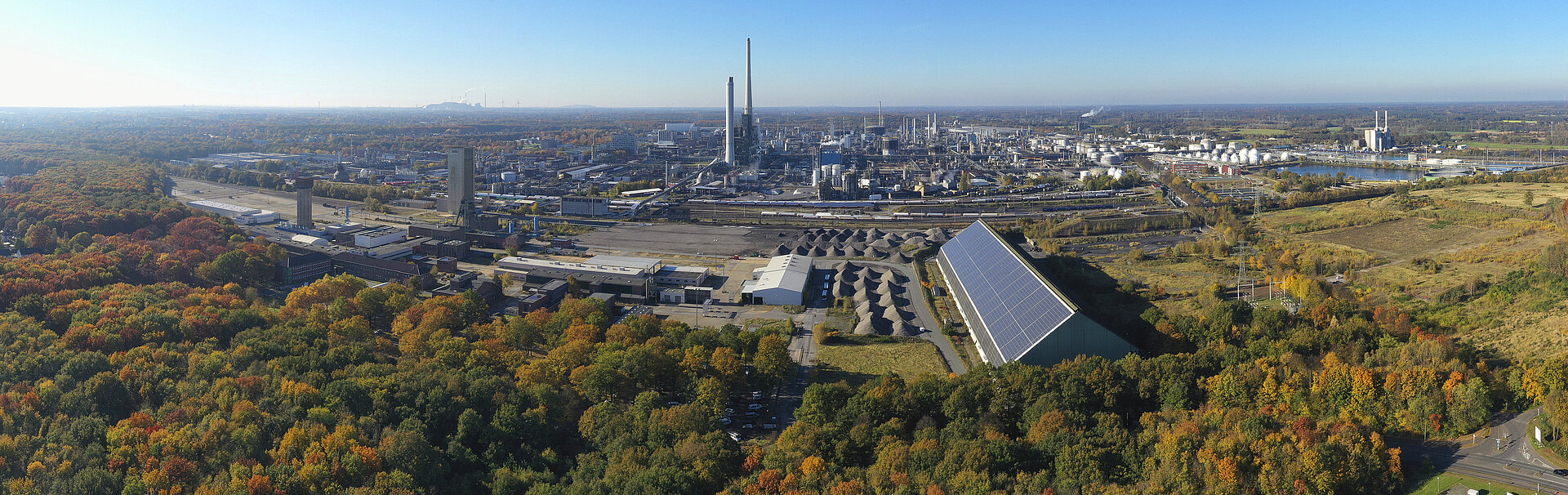
Positions of the Ruhrgebiet
Joint interest representation of the cities and counties
Advocacy for the region
Many EU policies impact local economies and societies. Therefore, European policy issues are a constant priority for the Ruhrgebiet. The Regionalverband Ruhr (RVR) continuously advocates for the region's interests, for example by way of expert discussions, through position papers, and in consultations. Key topics include the future of EU Cohesion Policy, the revitalisation of industrial sites, strengthening social cohesion, and the region's green transition.
Good to know
The RVR coordinates the Ruhrgebiet's positions on EU policies through joint working groups with its cities and counties. The aim is to speak with one voice on important topics.
Aktuell
Current developments
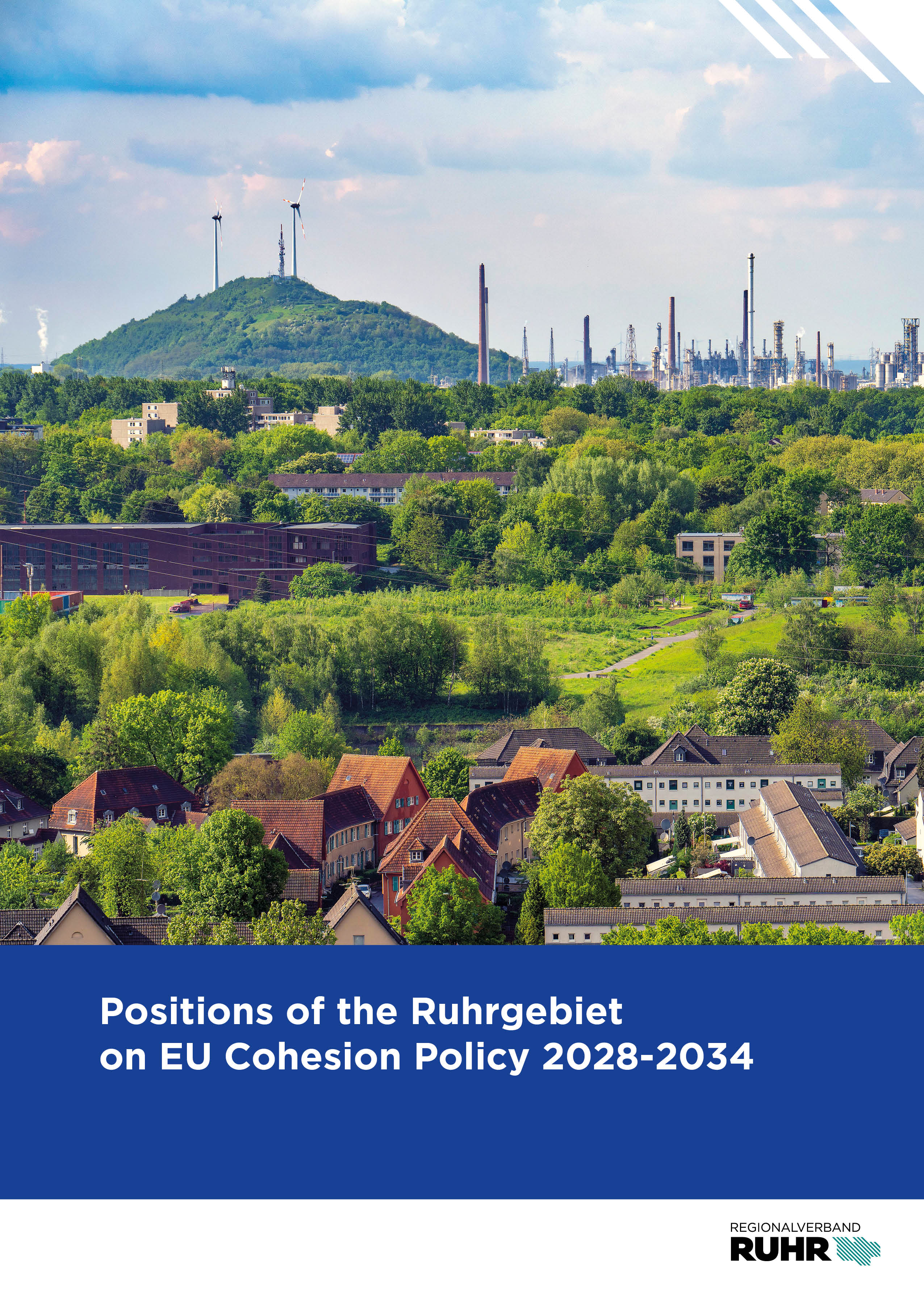
Positions of the Ruhrgebiet on EU Cohesion Policy 2028-2034
The RVR, together with the cities and counties of the Ruhrgebiet as well as other regional partners, has collated common positions on the future of EU Cohesion Policy. The positions describe 10 key requirements for the design of the future funding programmes:
| 1. | The EU's new priorities and crisis instruments must not be financed at the expense of long-term investments. Regions need reliable and adequate cohesion funds. |
| 2. | The EU should increase co-financing for more developed regions to 50%. |
| 3. | Cohesion funds should be managed in the regions (i.e. in Germany by the Länder). |
| 4. | Partners should be involved early on during all stages of decision-making. The State of North Rhine-Westphalia should also involve local authorities more effectively in its monitoring committees. |
| 5. | The federal and state governments should use the NRPP to better coordinate funding priorities, deadlines, and procedures, also with a view to simplifying the implementation of integrated projects. |
| 6. | The Ruhrgebiet rejects a stronger role for the European Semester in the preparation and management of cohesion funds. |
| 7. | The EU should stick to payments based on actual costs because it cannot be excluded that payments linked to milestones and objectives entail additional financial risks for local beneficiaries. |
| 8. | The EU should ensure adequate annual allocations under the NRPP and a timely start of the funding period. |
| 9. | The EU should unify state aid rules across all EU programmes. Funding for local authorities should generally be considered state aid compliant. |
| 10. | The EU-Commission should set up a uniform digital platform for the application, reporting and payment in all EU programmes. |
These general points are supplemented by two requirements related to the Ruhrgebiet’s specific transition trajectory:
| 11. | The EU should provide tailor-made funding for regions in transition, particularly for the purchase and revitalisation of industrial brownfields. |
| 12. | For regions in transition, the ESF is key for maintaining social peace. The EU should thus increase the budget of the ESF compared to the current funding period. |
Andrea Höber
Andrea Höber
Head of Department
Department for European Affairs
hoeber@rvr.ruhr
+49 (0) 201 2069 6362
Kronprinzenstr. 6 45128 Essen
Christoph Sebald
Christoph Sebald
Department for European Affairs
sebald@rvr.ruhr
+49 (0) 201 2069 350
Kronprinzenstr. 6 45128 Essen